Adelie
Penguin Adaptations: Feathers
 |
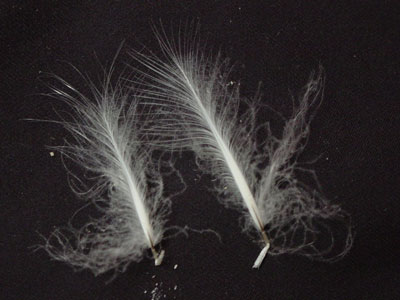 |
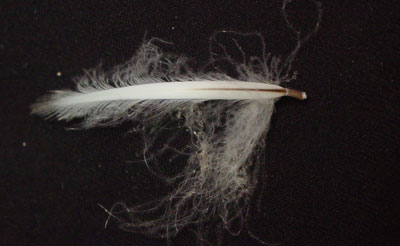
| Adelie feather, white except for the black tip. Notice the large amount of downy material near the base of the feather. This provides a thick warm undercoat. The other (left) end is very stiff providing the waterproof covering which keeps the penguin dry. | These more puffy feathers are from the penguins head, where it can raise and lower a crest depending on what mood it is in. |
 |
 |
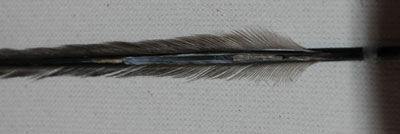
| The Adelie penguin's tail has only a few feathers which are very stiff and vary in length from long in the middle to short on the sides. See further explanation under "Adaptations of the Tail." | This bird has fluffed himself up in order to stay warmer. Air, warmed by the skin, can move among these feathers, trapped between the skin and the outer ends of the feathers. This is the same principle as that of a down jacket or down comforter that people use. |
 |
.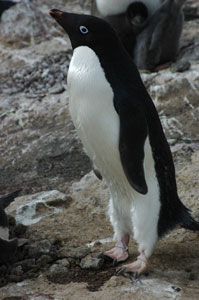 |
| The wind has blown this Adelie’s feathers apart. You can see the thick layer of down, which lies underneath the strong compacted tips of the outer, 'contour feathers'. These outer feathers are almost like fish scales and keep the the water away from the downy layer. | This bird has released most of the air between its feathers, giving him a sleeker and thiner look. This bird is ready for action. |
 |
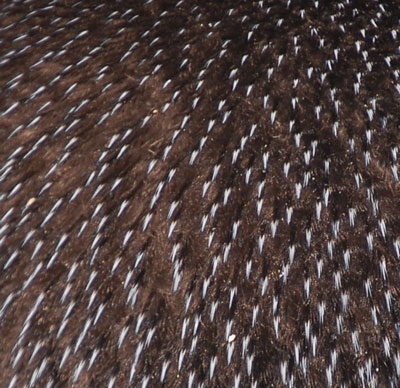 |
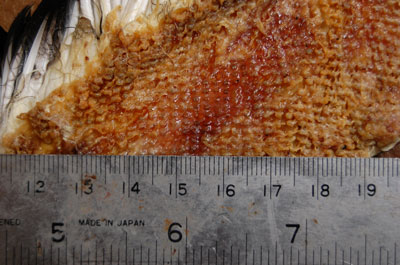
| The inside of an Adelie Penguins skin. Each bump represents where a feather is attached. The stated amount of feathers is 45 /cm2. Count them for yourself and see what you come up with. | From afar, Adelie Penguins look black on their backs, but close up you can see the black feathers are tipped with blight blue. It is easier to see when they ruffle their feathers like in the picture above. |
| HOME > TAIL > BEAK > BODY > FEATHERS > FEET > WING > PREENING | |
